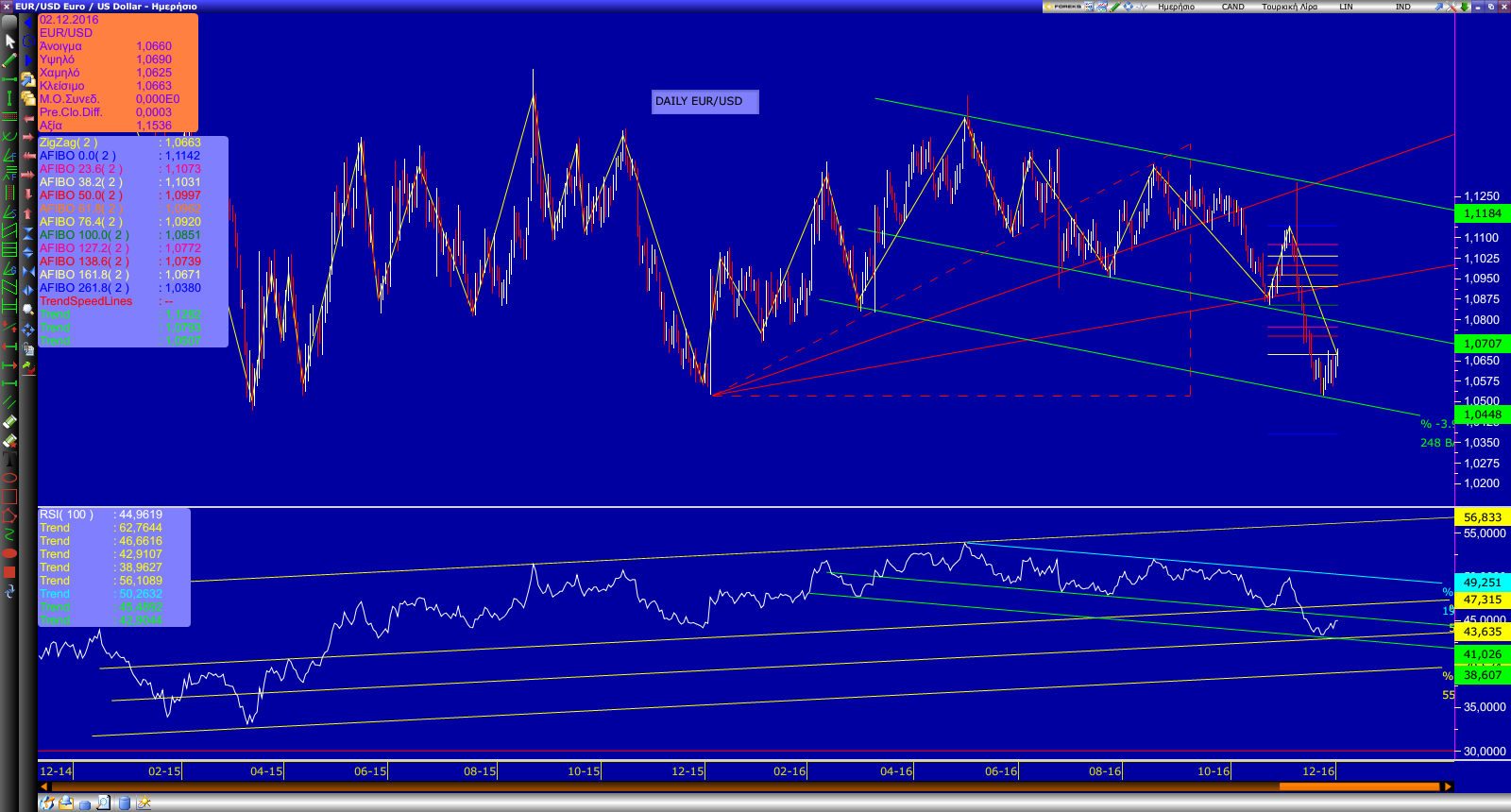
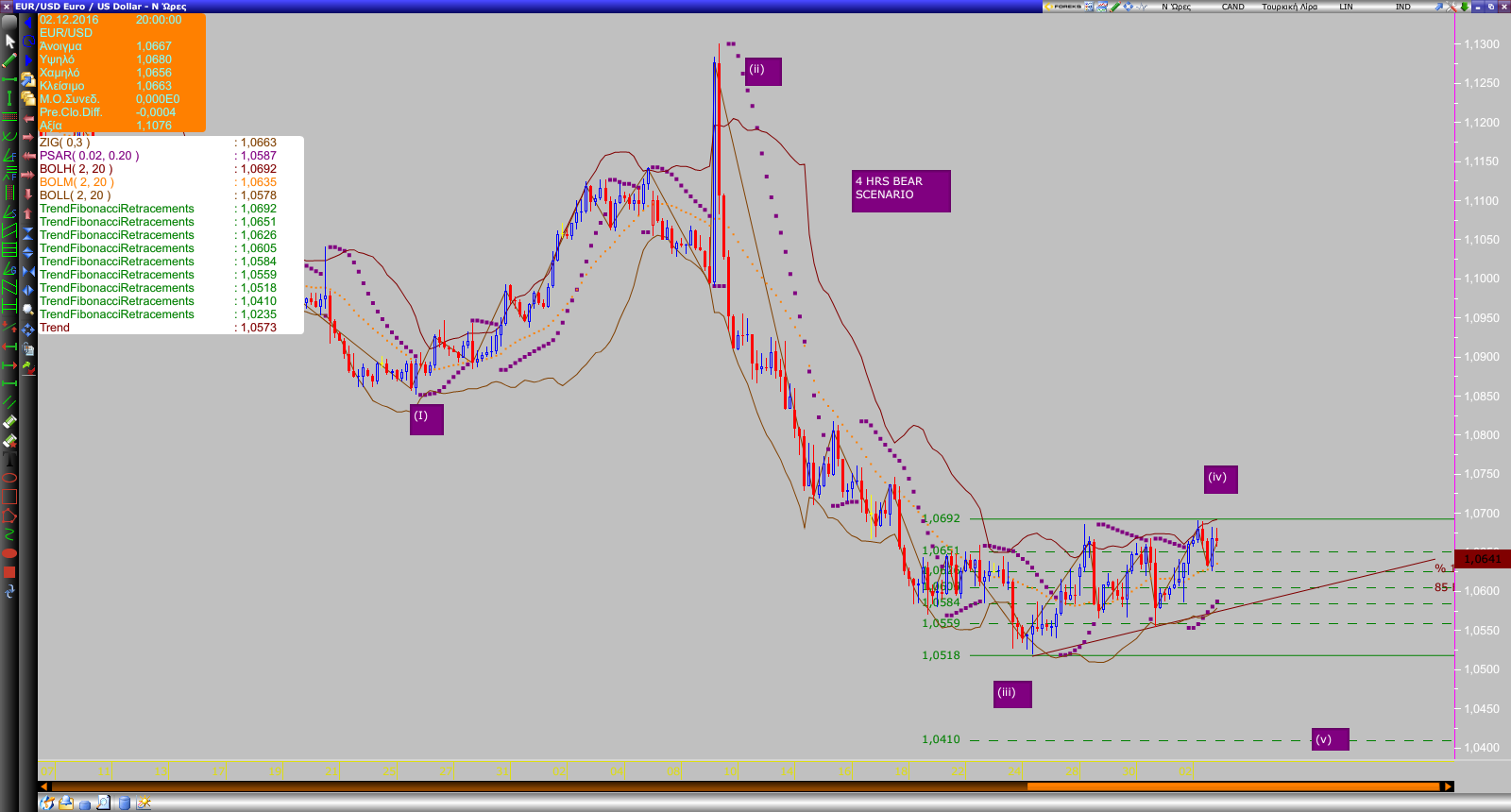
EUR/USD Trading Channel and Elliott Wave
EUR/USD Trading Channel and Elliott Wave
EUR/USD Trading Channel and Elliott Wave
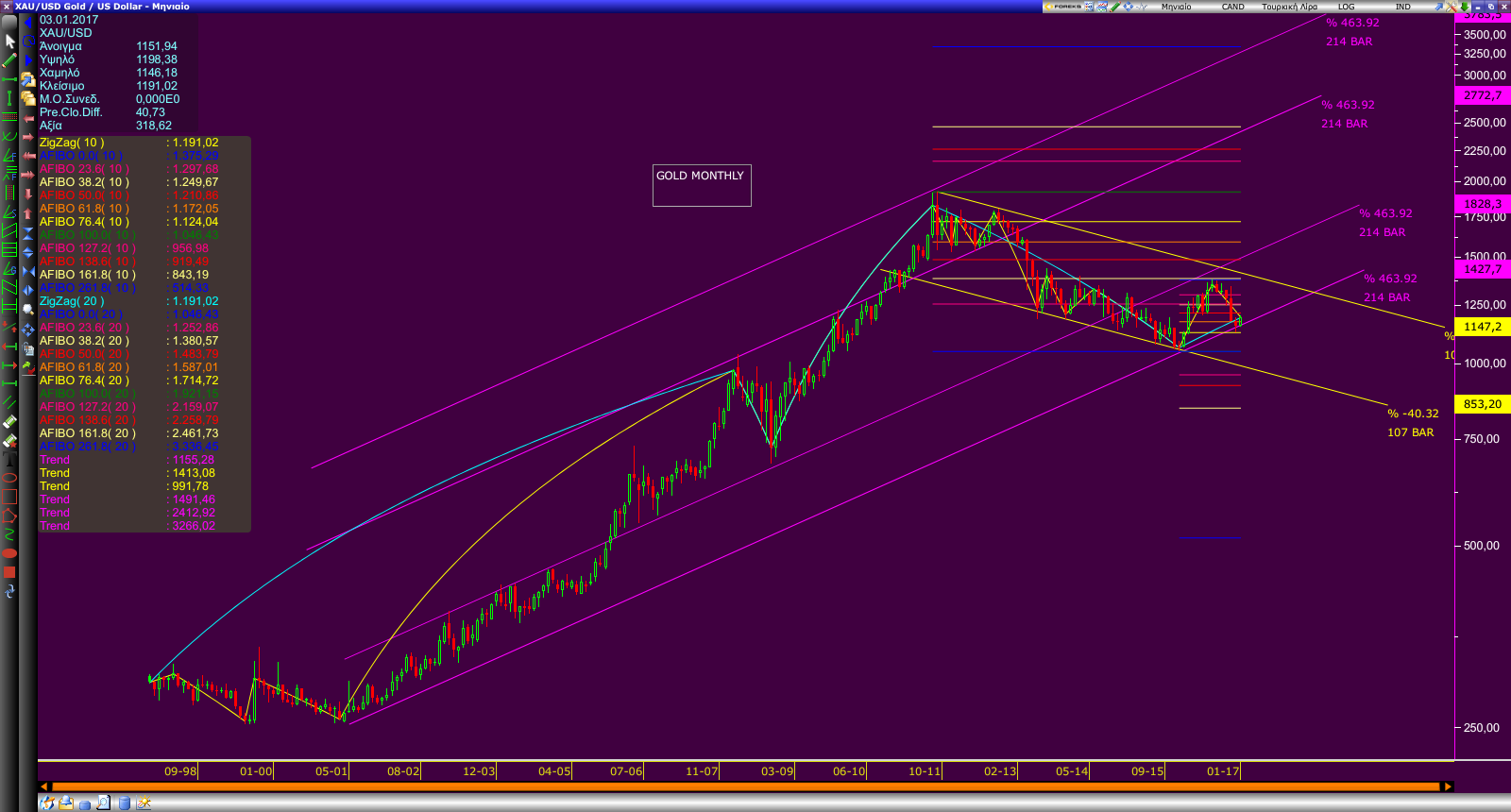
GOLD Trading Channel and Elliott Wave
Oil prices shot to their highest levels since mid-2015 on Monday after OPEC and other producers reached their first deal since 2001 to jointly reduce output in order to rein in oversupply and prop up markets.
Brent crude, the international benchmark for oil prices, soared to $57.89 per barrel in overnight trading between Sunday and Monday, the highest level since July 2015.
U.S. West Texas Intermediate (WTI) crude also hit a July 2015 high of $54.51 a barrel.
Brent and WTI eased to $56.83 and $54.07 respectively by 0629 GMT, but were both still up over 4 percent from their last settlements.
With the deal signed after almost a year of arguing within the Organization of the Petroleum Exporting Countries and mistrust in the willingness of non-OPEC Russia to participate, focus is switching to compliance of the agreement.
“We believe that the observation of the OPEC-11 and non-OPEC 11 production cuts is required to sustainably support… oil prices to our 1H17 WTI price forecast of $55 a barrel,” Goldman Sachs (NYSE:GS) said.
“This forecast reflects an effective 1.0 million barrels per day (bpd) cut vs. the 1.6 million bpd announced cut and greater compliance to the announced cuts is therefore an upside risk to our forecasts.”
AB Bernstein said the agreed deal “amounts to an aggregate supply cut of 1.76 million barrels per day (bpd) from 24 countries which currently produce 52.6 million bpd, or 54 percent of world oil supply.”
Bernstein said that “some of the non-OPEC supply cuts will come from natural decline, but most will come from self-imposed cuts.”
Saudi Aramco has told U.S. and European customers it will reduce oil deliveries from January.
“The kingdom is targeting excess inventories, the lion’s share of which sit in the United States,” said Virendra Chauhan, oil analyst at Energy Aspects in Singapore. “Lower Saudi exports to the U.S. could also make the export arbitrage uneconomic.”
OPEC plans to slash output by 1.2 million bpd from Jan. 1, with top exporter Saudi Arabia cutting around 486,000 bpd in a bid to end overproduction that has dogged markets for two years.
On Saturday, producers from outside OPEC agreed to reduce output by 558,000 bpd, short of the target of 600,000 bpd but still the largest contribution by non-OPEC ever.
“Non-OPEC participation should add to bullish sentiment,” Morgan Stanley (NYSE:MS) said.
From outside OPEC, Russia said it would gradually cut 300,000 bpd.
“Once cuts are implemented at the start of 2017, oil markets will shift from surplus into deficit. Given the cuts in production announced by OPEC, we expect that markets will move into a 0.8 million bpd deficit in 1H17,” AB Bernstein said.
Still, some analysts expect producers, drawn by higher oil prices, to increase output again.
“While better compliance than we expect would initially lead to higher prices – with full compliance worth an additional $6 per barrel to our price forecast – we expect that a greater producer response, especially in the U.S., would eventually bring prices back to $55,” Goldman Sachs said.
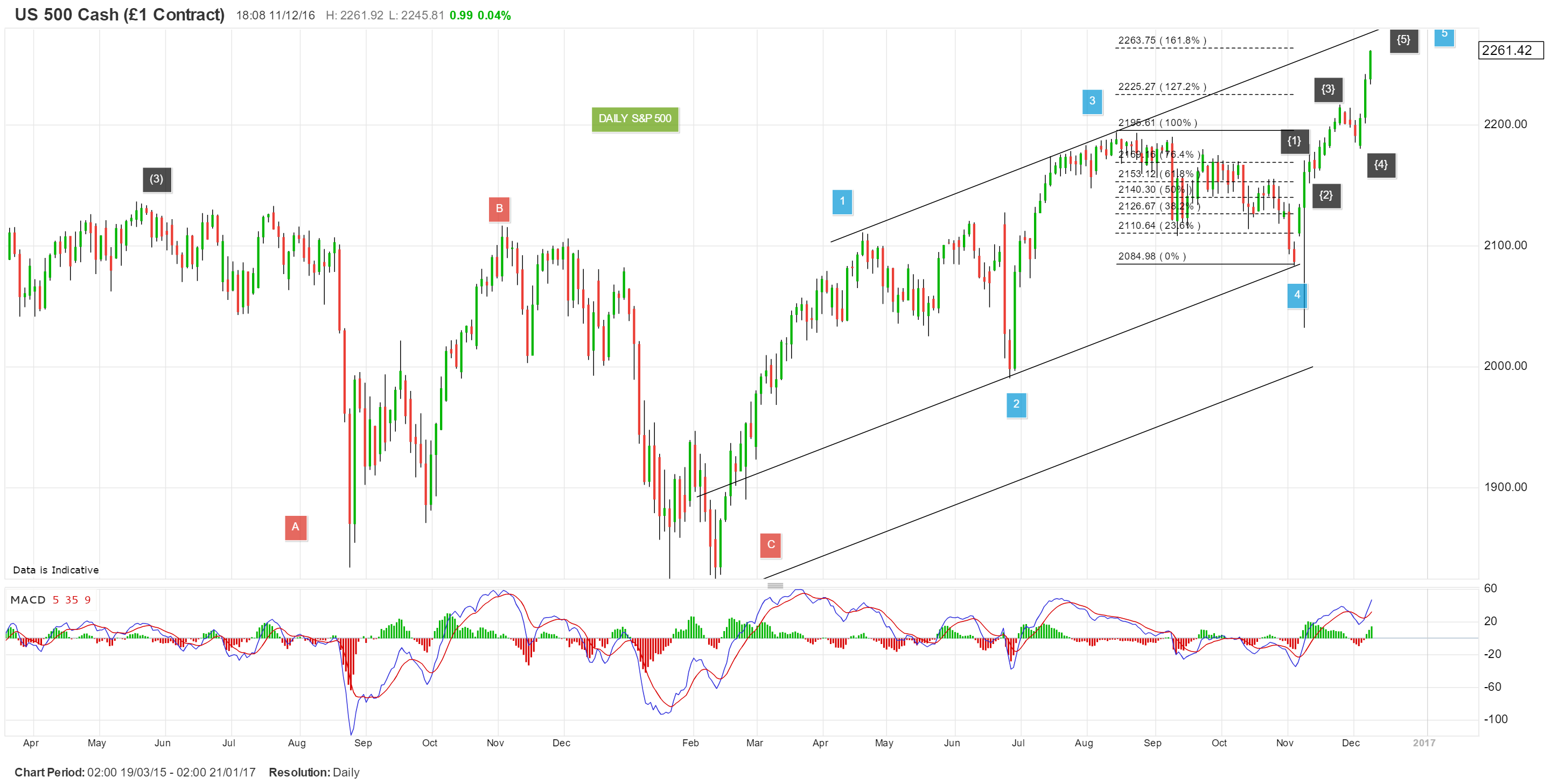
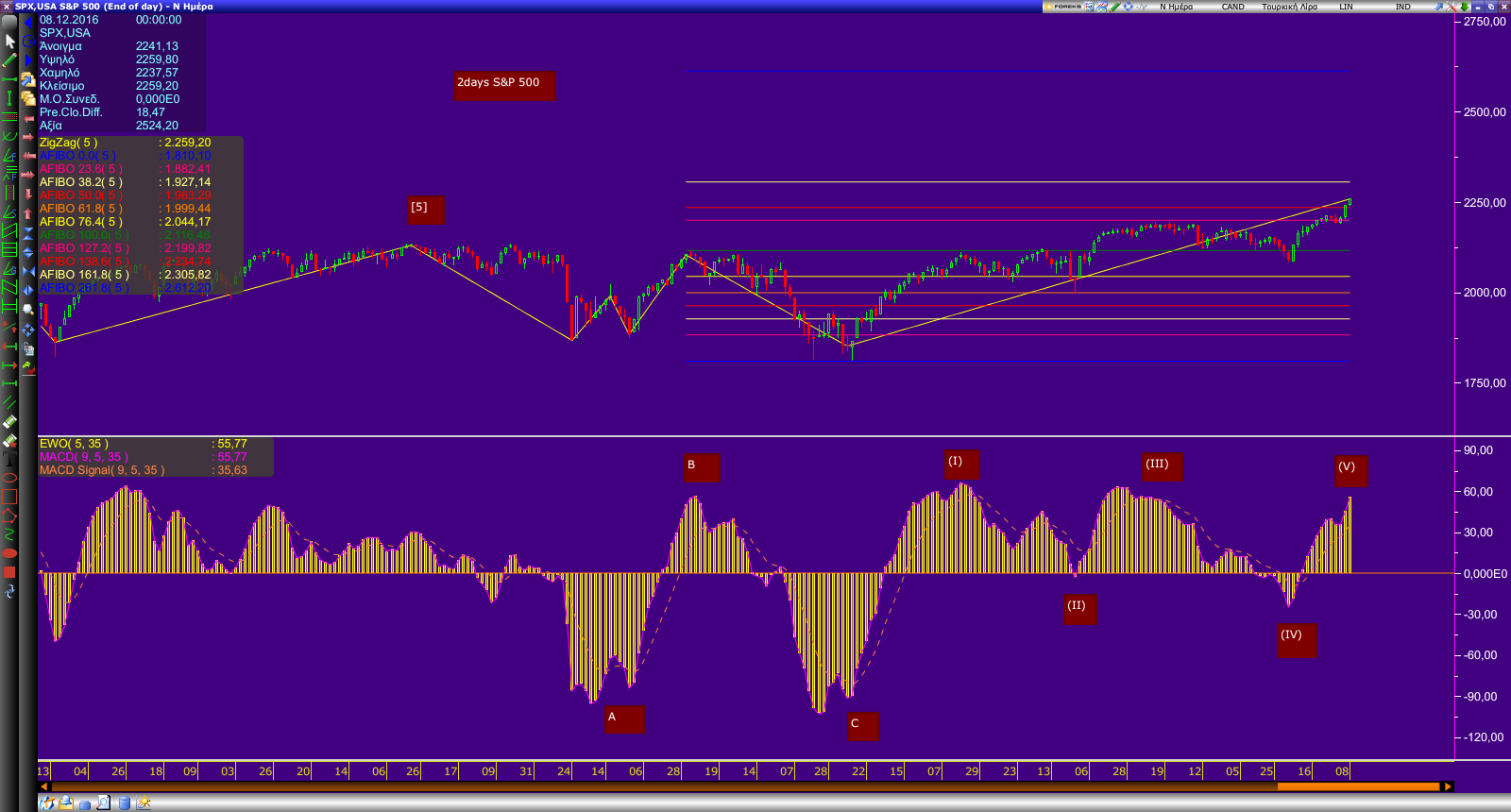
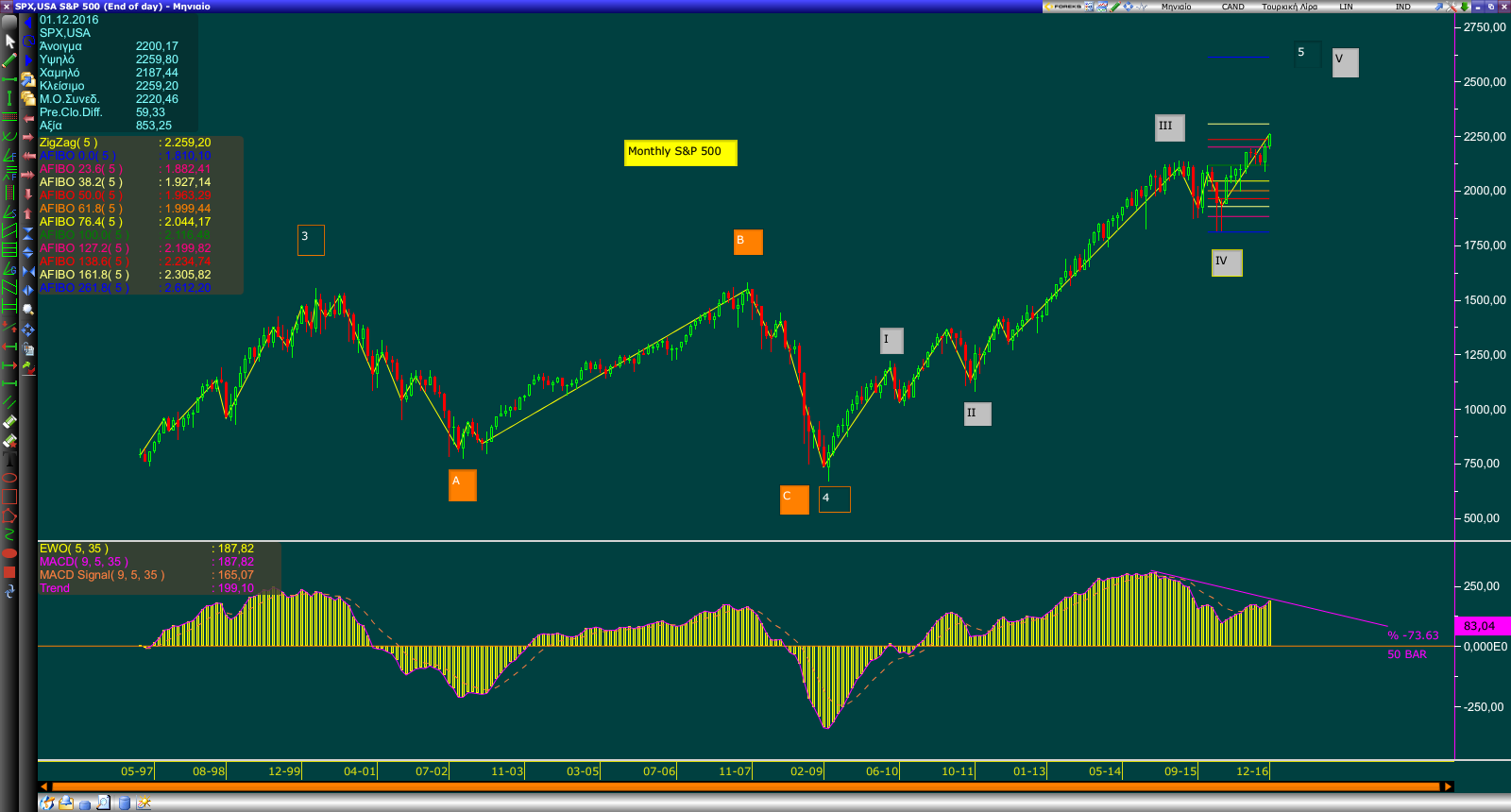
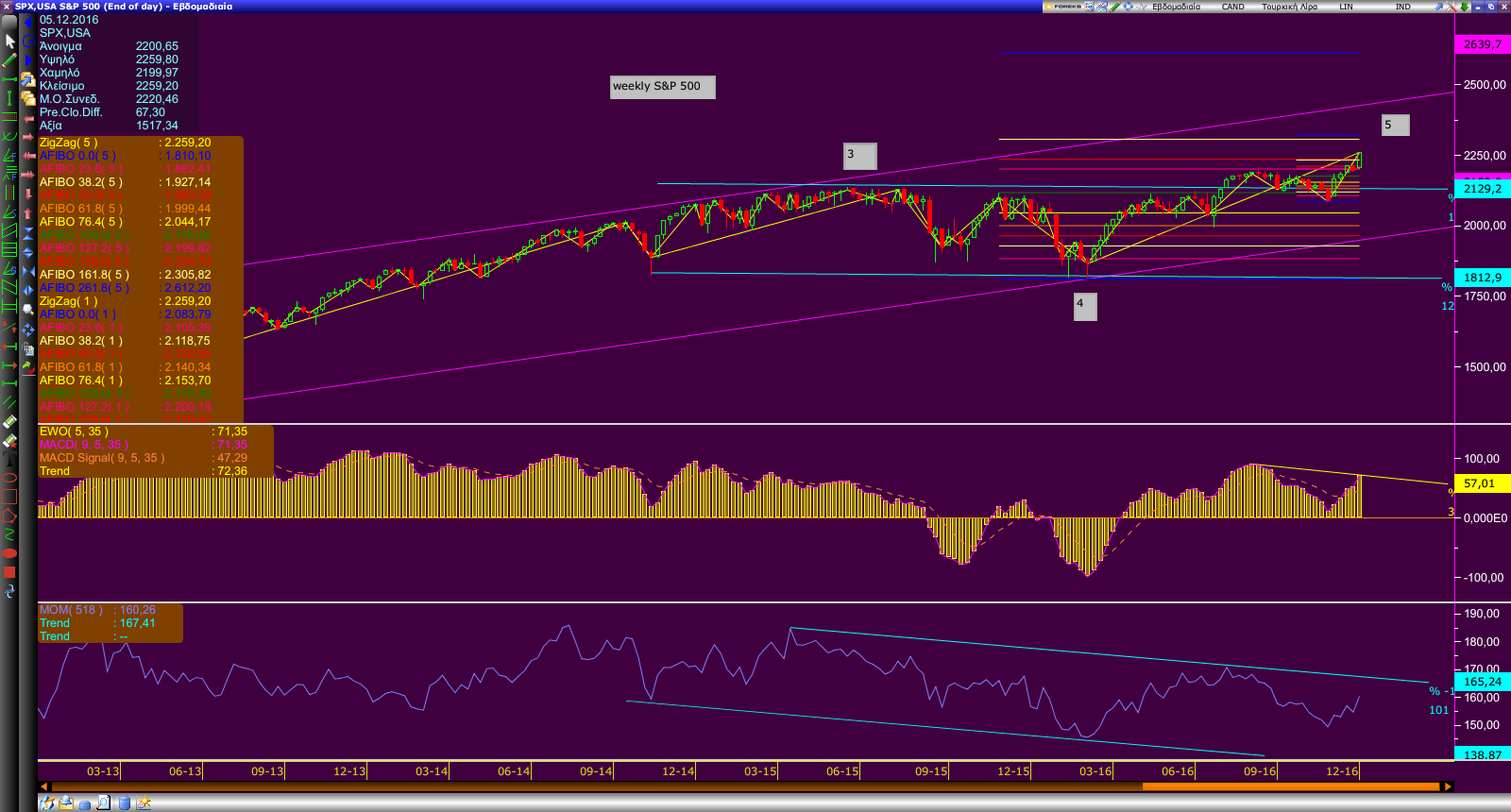
S&P 500 and Elliott Wave Oscillator
In the back reaches of the Dakota Access Pipeline protest camp, U.S. military veterans, armed with saws, hammers and other tools, are quietly building barracks, an infirmary and a mess hall.
Despite the bitter cold and an evacuation order from the U.S. Army Corps of Engineers, the veterans hope to erect enough space to house at least several hundred peers making their way into the Oceti Sakowin Camp here in Cannon Ball.
Veterans interviewed by Reuters gave a plethora of motives for traveling here. Some felt it was their patriotic duty to defend protesters, especially since Native Americans have historically had an active presence in the U.S. military.
For others, coming here offers a sense of purpose they have lacked since returning to civilian society. For all, the camaraderie with those who have also shared military service was important.
“Our commitment has not expired because we took off the uniform,” said Charles Vondal, 51, an Army veteran and Native American from Turtle Mountain, N.D. “We understand what it means to put our lives on the line.”
The response last month to a call for 2,000 veterans to act as a barrier between activists and law enforcement was much swifter than expected – with organizers having to stop accepting volunteers.
The veterans arriving say their presence will make it less likely that police will resort again to aggressive tactics, after water cannons and tear gas were used on a group of protesters in sub-freezing temperatures two weeks ago.
More than 500 activists have been arrested over the last several months.
“I felt it was our duty to come and stand in front of the guns and the mace and the water and the threat that they pose to these people,” said Anthony Murtha, 29, from Detroit, who served in the U.S. Navy from 2009 to 2013.
Local law enforcement said the specter of having thousands of military-trained veterans in the area was of concern, but they were not expecting any melees.
“If (veterans) come to this area and they want to protest peacefully, if that’s what they want to do and have their voice heard, then there’s absolutely no issues with that,” Kyle Kirchmeier, sheriff for Morton County, North Dakota, where the pipeline is routed, said in an interview Saturday.
Some veterans groups are unhappy with those coming to support the protesters, saying they are standing up for illegal behavior. They also note that many law enforcement officers are veterans. North Dakota’s state veterans coordinating council, in a letter last week, asked the veterans who want to stand with the protesters not to come.
“We don’t want to see veterans facing down veterans,” said Lonnie Wangen, commissioner of North Dakota’s Department of Veterans Affairs.
But veterans at the camp say pictures and video of water hoses used against Native Americans spoke to their concern of heavy-handed tactics used by law enforcement.
The U.S. Army Corps of Engineers has yet to grant a permit for Energy Transfer Partners to drill under Lake Oahe, a reservoir that is part of the Missouri River.
This one-mile stretch represents the last unfinished portion of the line in North Dakota, which will stretch as far as Illinois.
Native Americans serve at a high rate in the armed forces, according to data from the U.S. Department of Veterans Affairs. A 2012 report showed more than 150,000 veterans of Native American descent. U.S. Defense Department data as of 2014 put Alaskan/Native American service members at more than 24,000.
“It’s symbolic for people who stood up for this nation’s freedom to stand up for the first inhabitants of this nation,” said Dave Archambault II, chairman of the Standing Rock Sioux, on Saturday.
Veterans Stand With Standing Rock, which organized this weekend’s rally and other events, has warned veterans they could experience flashbacks to combat experience.
“We’re under constant surveillance with helicopters and planes flying over. There is a military boundary with barbed wire,” said Angie Spencer, 34, a clinical psychologist from Seattle who has worked with veterans.
The surroundings, she said, mean counselors are vigilant for signs of post-traumatic stress disorder.
On Friday, the rally organizers met with law enforcement on the Backwater Bridge, the site of two of the most heated confrontations between police and protesters in the last several weeks. They said they were there to protest peacefully.
The chances that the pipeline will be stopped at this point seem slim. President-elect Donald Trump last week voiced support for the project, which has been delayed twice since September by the U.S. Army Corps of Engineers.
Opposing the pipeline, standing with the Standing Rock Sioux tribe, was an opportunity to again find a personal mission, some said.
“You kind of lose your purpose when you’re out (of the military),” said John Nelson, 25, from San Diego, who spent seven years in the Navy. “I think that’s why it’s so easy for so many veterans to jump on board.”
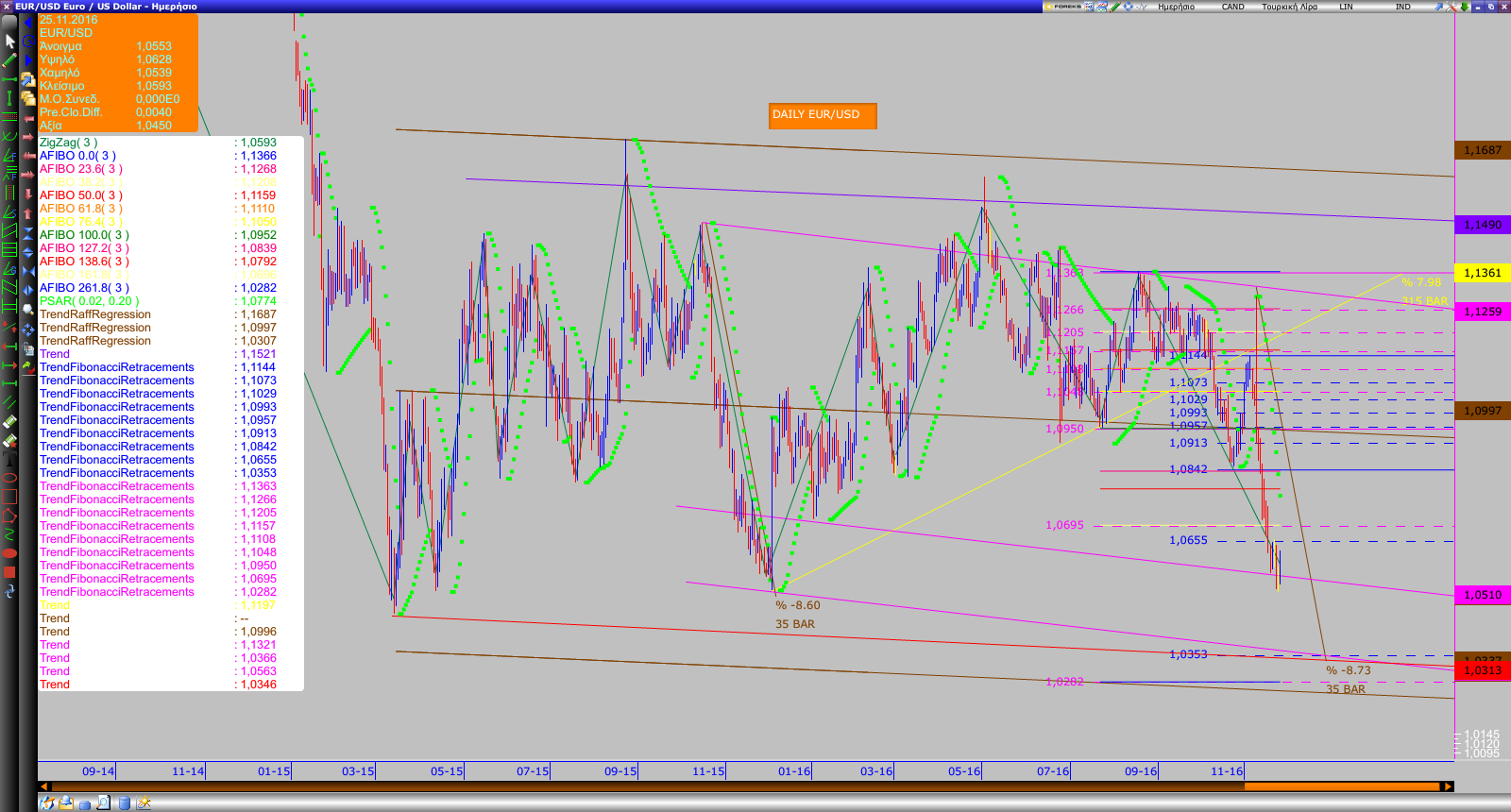
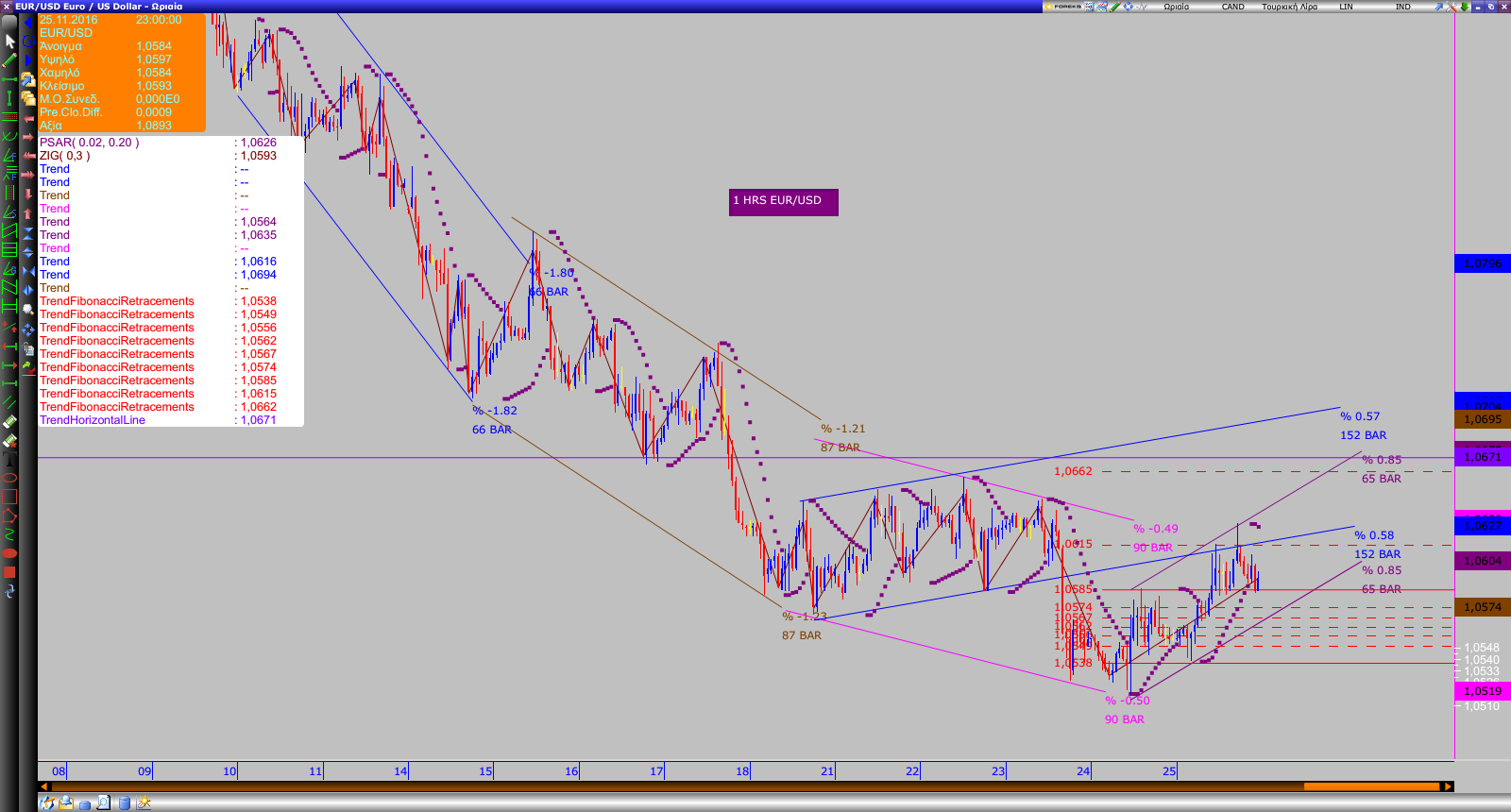
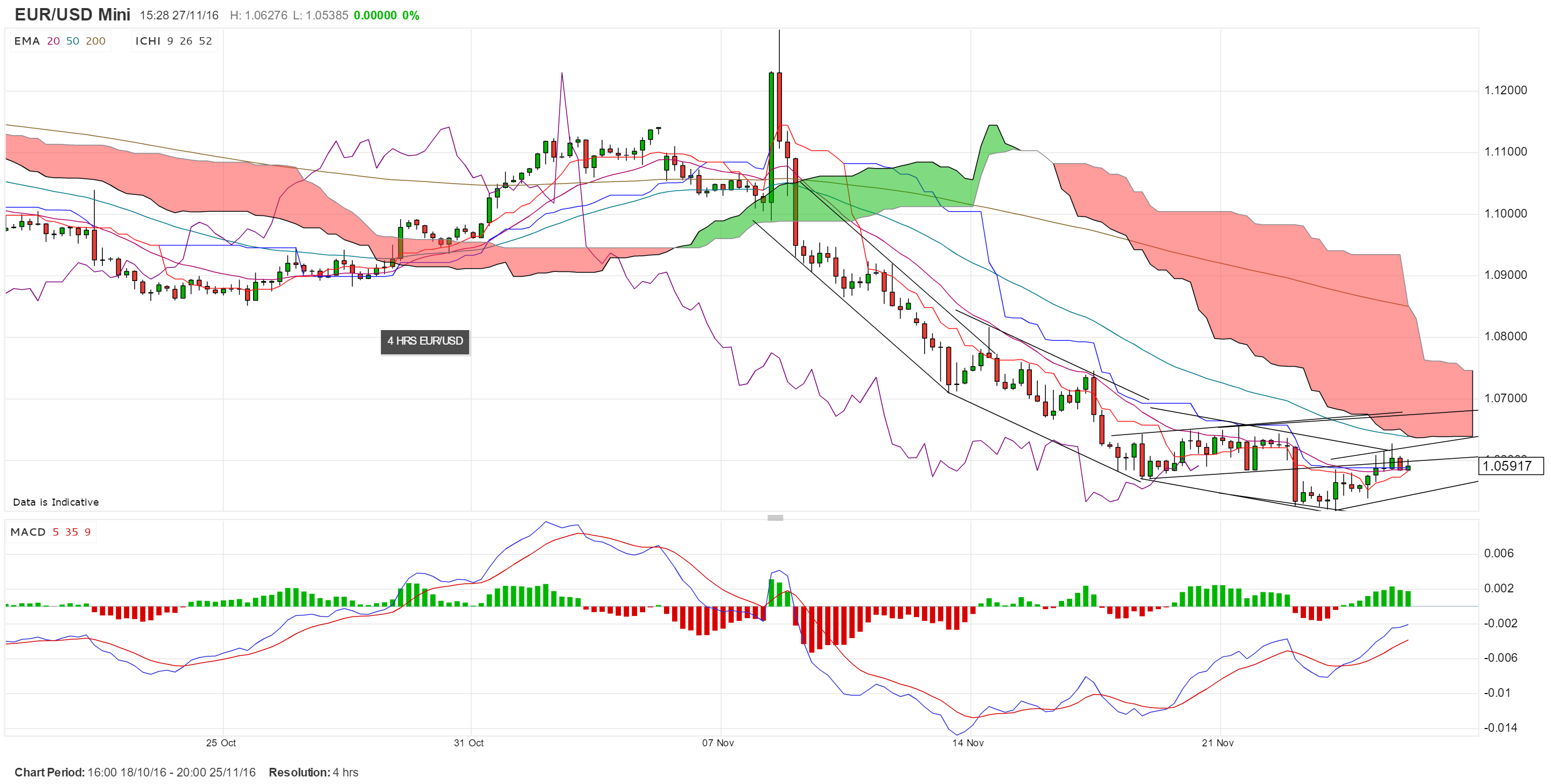
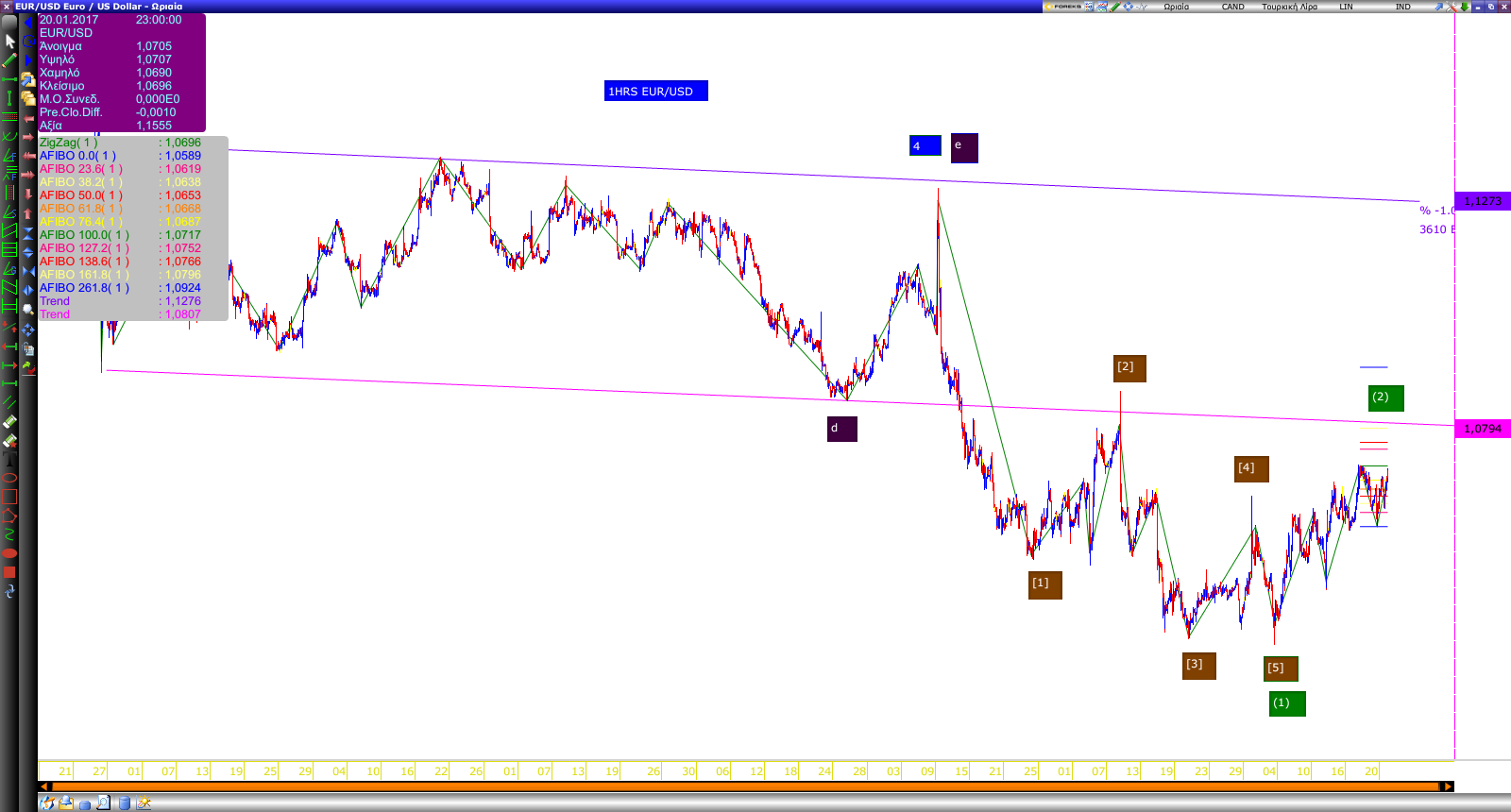
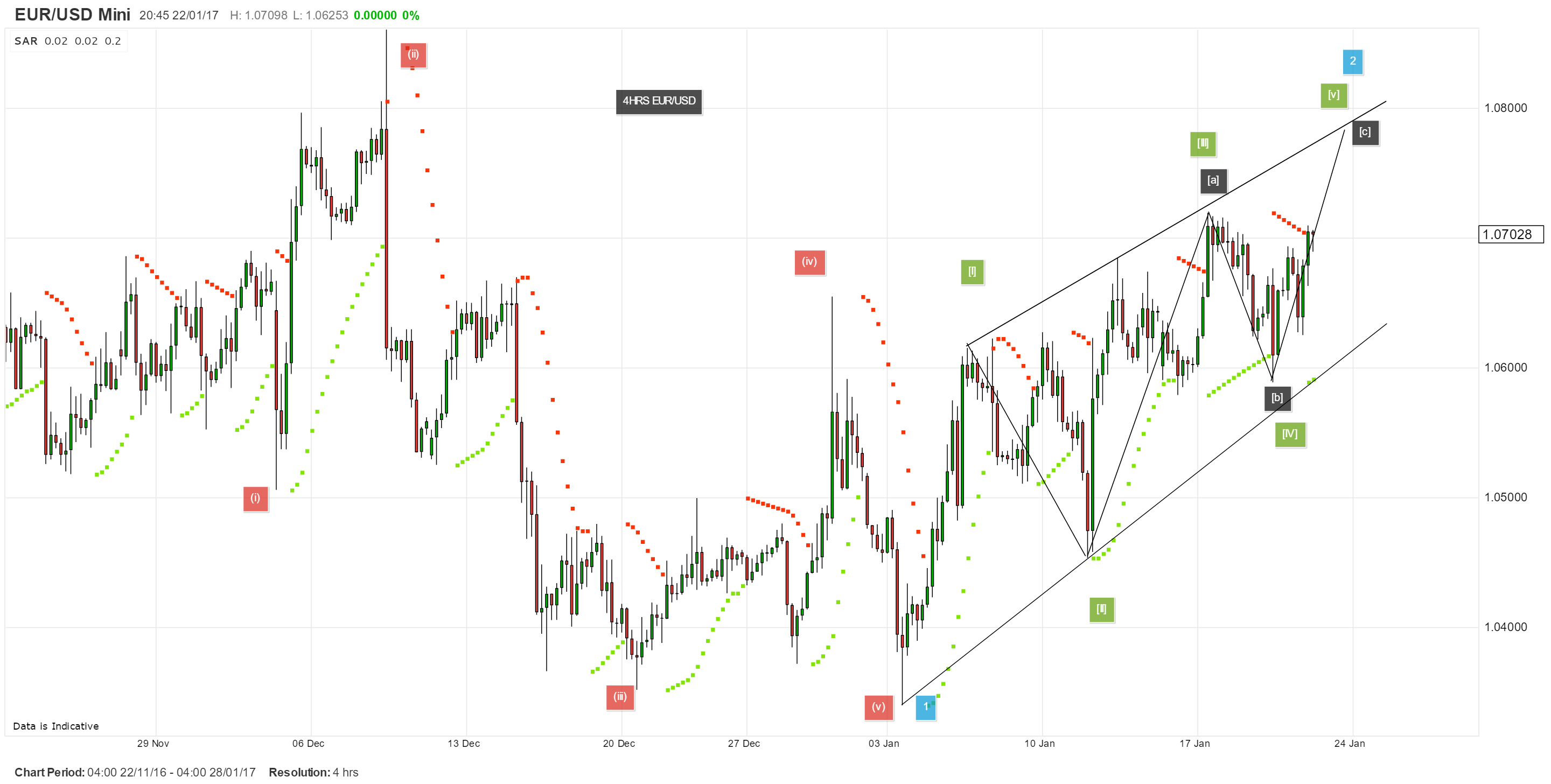
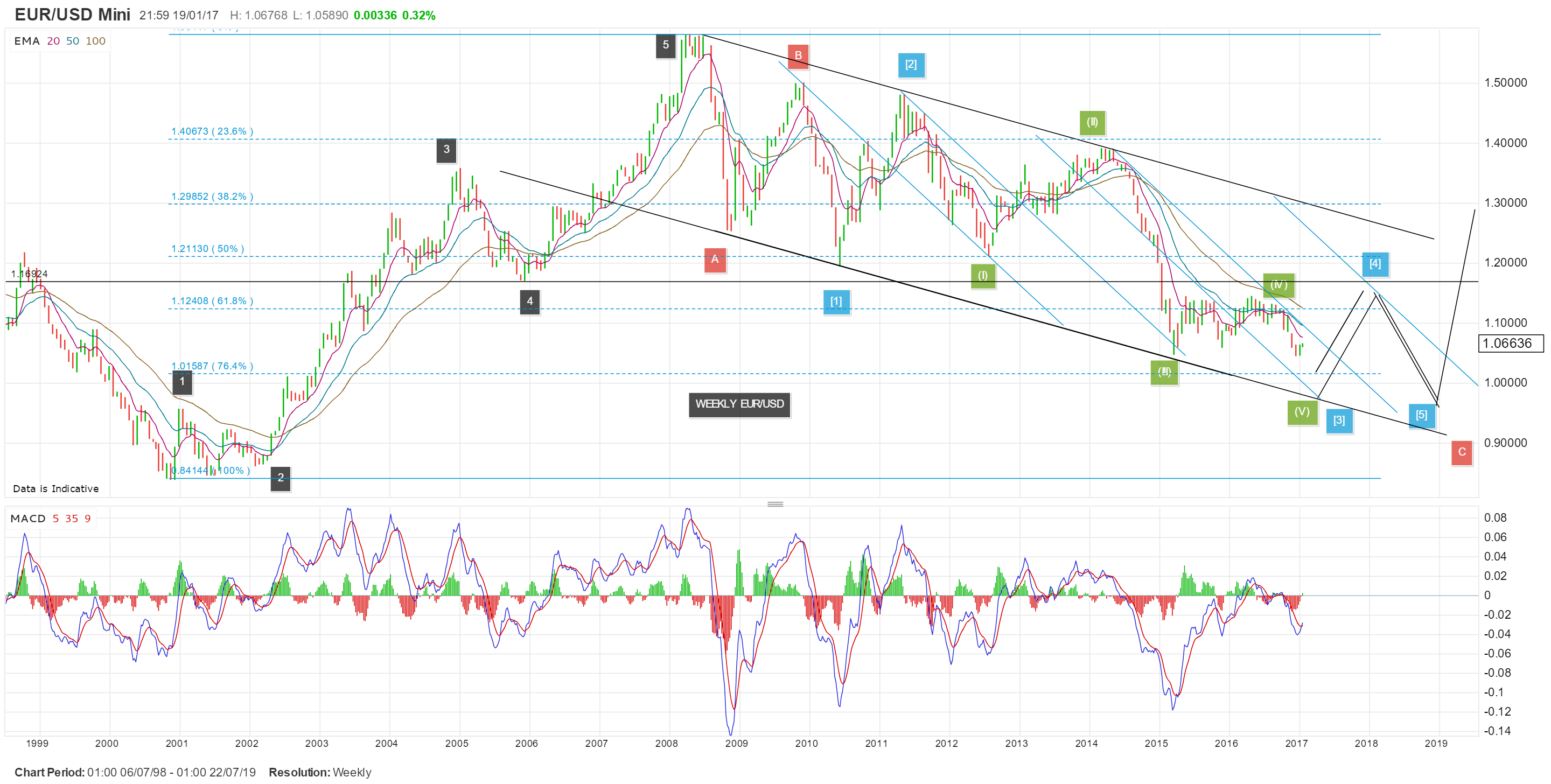
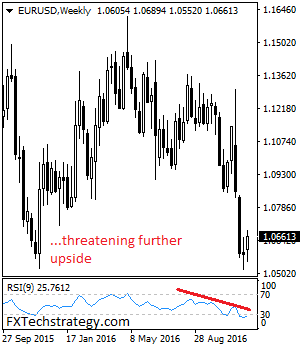
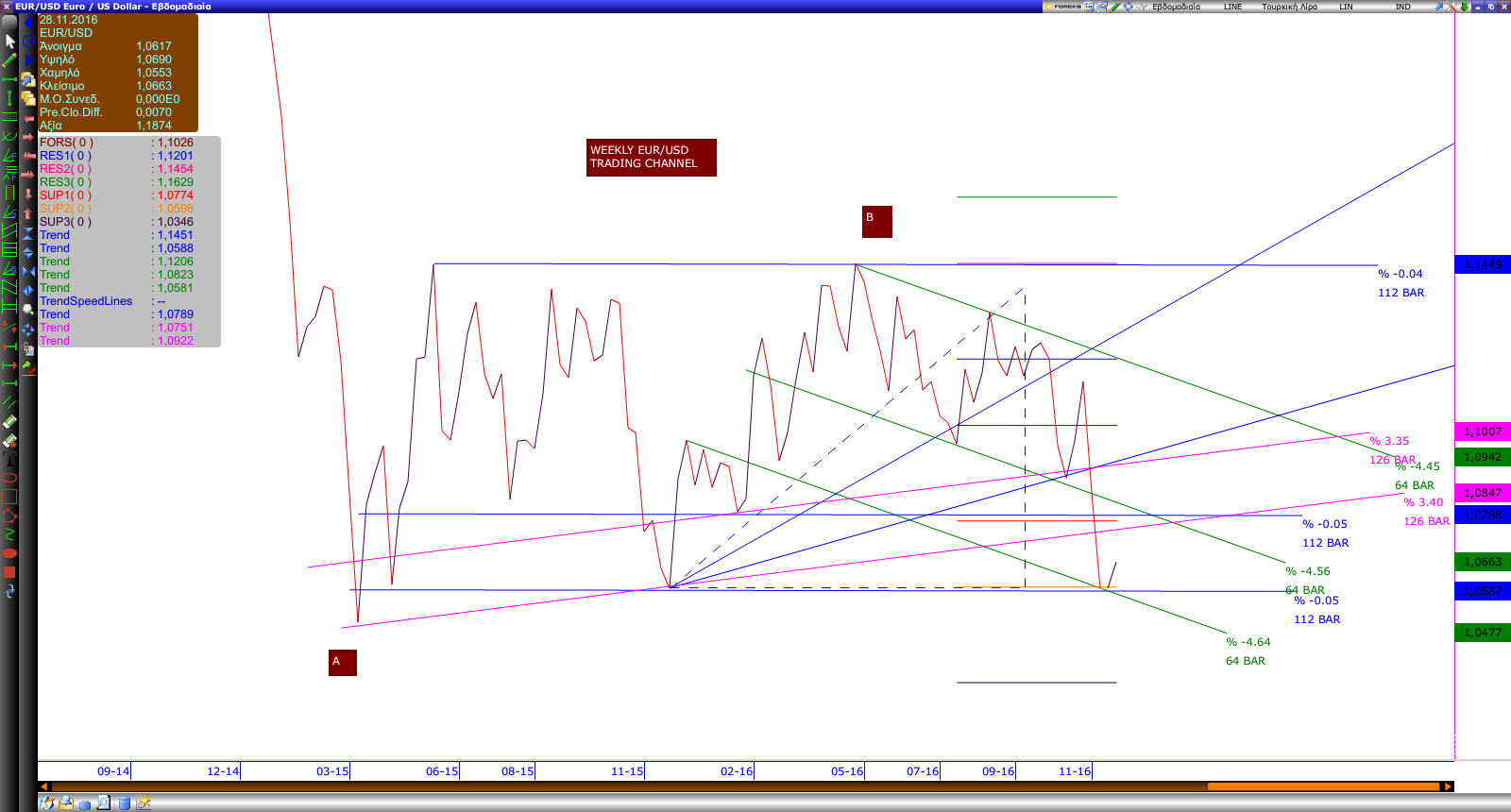
EUR/USD: The pair continues to seek for recovery though closing marginally higher on Friday. On the down, support lies at the 1.0600 level where a violation will aim at the 1.0550 level. A break of here will aim at the 1.0500 level. Conversely, on the upside, resistance comes in at 1.0700 level with a cut through here opening the door for more upside towards the 1.0750 level. Further up, resistance lies at the 1.0800 level where a break will expose the 1.0850 level. Its weekly RSI is bullish and pointing higher suggesting further corrective recovery. All in all, EUR/USD faces further downside pressure.
EUR/USD Trading Channel and Elliott Wave
GOLD Trading Channel and Elliott Wave
Investing.com – Crude oil prices rebounded in Asia on Monday as investors bet nervously on a a down-to-the-wire decision by OPEC to curb output as proposed.
U.S. crude oil prices rose 0.24% to $46.17 a barrel on the New York Mercantile Exchange. Global benchmark Brent futures gained 0.29% to $48.38 a barrel.
Last week, oil prices fell sharply on Friday amid uncertainty over whether the Organization of the Petroleum Exporting Countries can reach an agreement to cut production and prop up markets.
Doubts over whether major global exporters will be able to reach an agreement on November 30 to rein in output also kept investors on the sidelines. OPEC is to hold a meeting in Vienna on Wednesday aimed at finalizing the details of a proposed output cut, which it is hoped will reduce a global supply glut that has pressured oil prices lower for more than two years.
The producer cartel is attempting to get its 14 member states, along with non-OPEC member Russia, to implement coordinated production cuts.
Reaching an agreement on a deal to cut output has proved problematic, with some producers, most notably Iran, reluctant to curb production.
Most analysts believe that some form of consensus will be reached, but doubts remain over whether it will be enough to support the market.
“An agreement to a large production cut could send oil prices closer to $60 per barrel before year’s end, while failure to reach an agreement could cause oil prices to fall back to the low $40 per barrel,” analysts at Nordea said.